
We build the software your company runs on, in your team's own language, with every person seeing only what their job needs. One login. One menu. Nothing to learn. Live in one to three months, and some systems go live in one. No per-seat pricing. No subscription. You own all of it.
Add ten people or a hundred. The price of your system doesn't change.
No monthly license, no annual renewal, no price increase you didn't agree to.
The code, the repository, the data, and the infrastructure, in your name.
Off-the-shelf software rents you access to someone else's product, one seat at a time, for as long as you keep paying. This works the other way around. You pay one agreed fee for the build, and the entire system belongs to your company. After that, you pay us nothing unless you choose to keep building with us.
| Take the keys | Grow with us | |
|---|---|---|
| What happens | We finish the agreed scope and hand everything over | We keep building as your company grows |
| You receive | The full code base, your GitHub repository, documentation, and recorded walkthroughs | Everything in "Take the keys," plus a team that already knows your system |
| Who develops it next | You and your own developers | Us, billed month to month under your signed agreement |
| Ongoing cost to us | Nothing | Packages start at $50,000. The $8,000 to $10,000 setup fee is credited toward your package if you move forward. |
| Best for | Companies with in-house technical staff | Companies adding teams, menus, features, and workflows as they scale |
Either way, the system is yours from day one.
It started with one CRM. Then a scheduling tool. A spreadsheet for the thing the CRM couldn't do. A project tool for operations. Two AI tools somebody signed up for. An invoicing app. A form builder. A shared inbox. Somewhere along the way the company ended up paying for fifteen or twenty pieces of software, and none of them talk to each other the way anyone assumed they would.
Now the data that runs your business is scattered across all of them. Every tool holds a piece of the customer, and no tool holds the whole customer.
Five tabs or one record. That's the whole difference, multiplied by every customer, every employee, every day.
Salesforce, HubSpot, and GoHighLevel are built to serve every company on earth, which means they're built to serve none of them in particular. Thousands of features, hundreds of settings, menus inside menus. Most of your team will never touch most of it, and the people who do are afraid to change anything.
So something quietly happens. Your team starts recording less. Fields go unused because nobody knows what they're for. Notes end up in personal docs. Workarounds become policy. The most expensive software in the company becomes the least trusted, and leadership is making decisions on data everyone privately doubts.
Then a new hire starts, and someone has to teach them a system that the teacher doesn't fully understand either.
Pieces of every customer are spread across a dozen tools.
When software is confusing, people stop putting things in it.
Every hire relearns a system the trainer barely knows.
Reports pull from data half the team didn't enter.
We build a custom operating system for your company. It holds your customers, your pipelines, your workflows, your automations, your dashboards, and your internal tools in one place. It replaces the pile.
What makes it different is what each person sees when they log in. Customer service sees one menu. Sales sees their sales menu. Marketing sees theirs. Fulfillment and operations get their own. Founders and executives see everything, laid out as a clear overview of the whole company.
Nobody sifts through settings. Nobody saves custom views. Nobody asks where something lives. They log in, and their whole job is in front of them.
| Who logs in | What they see | What it replaces |
|---|---|---|
| Customer service | One menu | A CRM, a ticket tool, and a shared inbox |
| Sales | Their sales menu | A CRM, a dialer log, and personal spreadsheets |
| Marketing | Their marketing menu | Ad platforms, a lead sheet, and an attribution report someone builds by hand |
| Fulfillment and operations | Their operations menu | A project tool, a tracker, and a lot of status messages |
| Founders and executives | Everything, as one overview | Monday morning meetings to find out what happened last week |
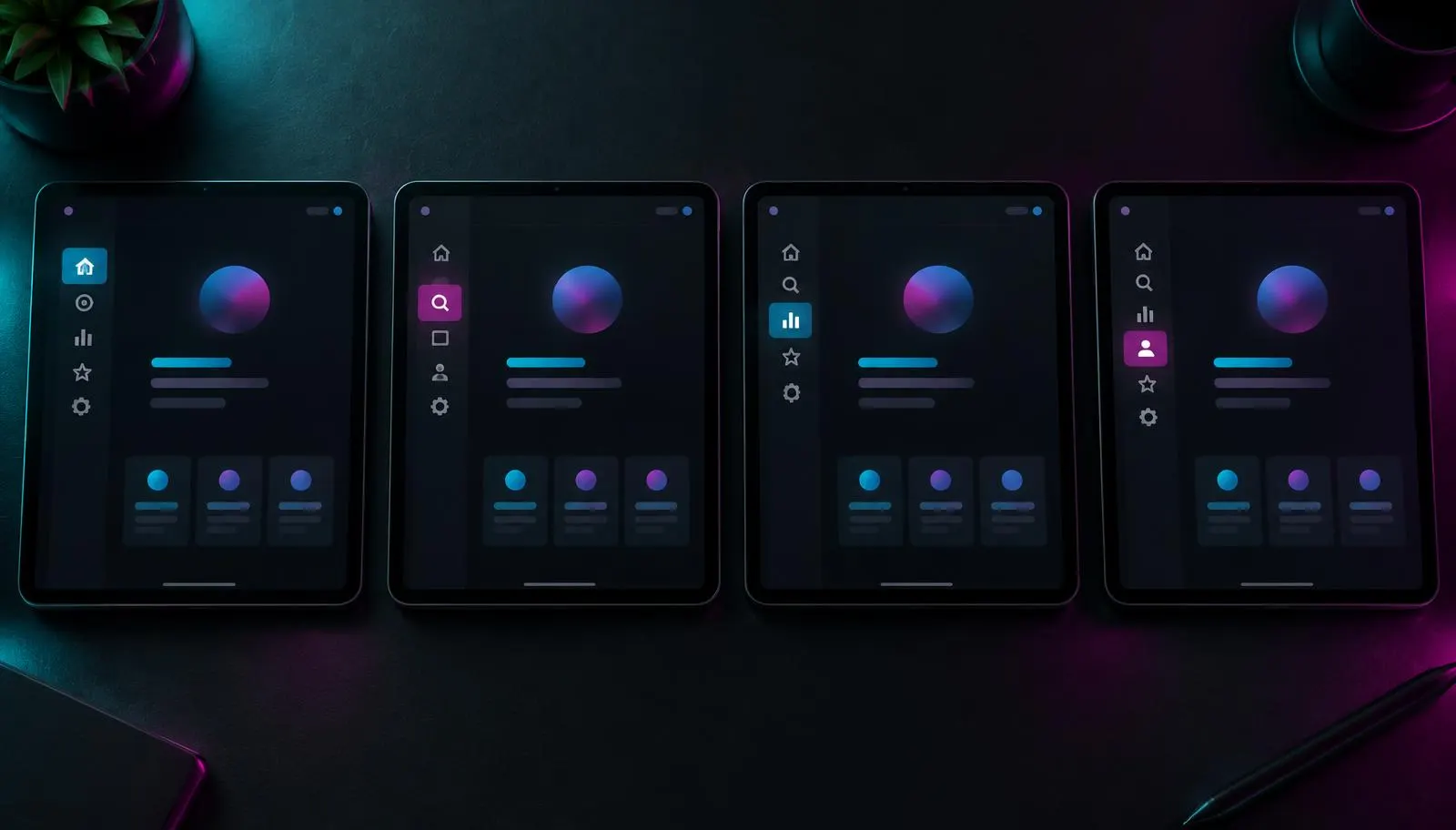
Every company has its own vocabulary. What your sales team calls a "hot lead," your vendor's CRM calls an "opportunity in stage two." What your operations team calls a "job," the software calls a "deal." Every one of those translations is friction, and friction is why people stop using the system.
We remove the translation. Every button, label, stage, status, and menu uses the exact words your team already says out loud. A new hire learns your business and the software at the same time, because they're the same thing.
If your team says it, the system says it.
We start every project with three days on-site. We sit with every team, watch how the work actually moves, and download the jargon, the shortcuts, the tools, and the workarounds that nobody ever wrote down.
Then we ask each team a simple question: if you could log in tomorrow and see only what you need, what would be on the screen? The operations view gets built the way operations wants it. The sales view gets built the way sales wants it. The executive view gets built the way leadership needs to read it.
Software that's designed by the people using it doesn't need to be sold to them internally. They already asked for it.

When there's only one menu in your language, there's very little left to teach.
Nobody needs to be the "CRM person" who knows where everything is hidden.
The team member who avoided the old system uses this one, because it's simple enough to use.
Everything that lived outside the system finally has a place inside it.
Data moves between steps automatically instead of being typed twice.
Fewer subscriptions, fewer logins, fewer places for information to get lost.
Simplicity is what each person sees. Underneath, the system can carry as much as your company runs on: automations, approvals, routing rules, client portals, invoicing, dashboards, and AI that handles the busywork. Your processes are built into the software, so nobody has to remember them.
When the system belongs to you, so does the control. You decide exactly who can see, edit, export, or delete anything, down to the individual feature. And every action anyone takes is logged with who did it, what they did, and when.
Know the moment someone downloads a customer list, changes a team's permissions, exports a report, edits a record they shouldn't, or logs in from somewhere unexpected. Nothing happens in your system without leaving a trace.
Add, remove, and suspend users instantly, and see every account's activity in one place.
Set view, edit, export, and delete rights per role, per team, or per person.
Every login, view, edit, export, and settings change is recorded with a name and a timestamp.
Get notified the moment anyone downloads or exports data.
Know when permissions, group settings, or automations are changed, and by whom.
A permanent history you can hand to an auditor, an attorney, or your board.
Your data, your rules, and a record of everyone who touched it.
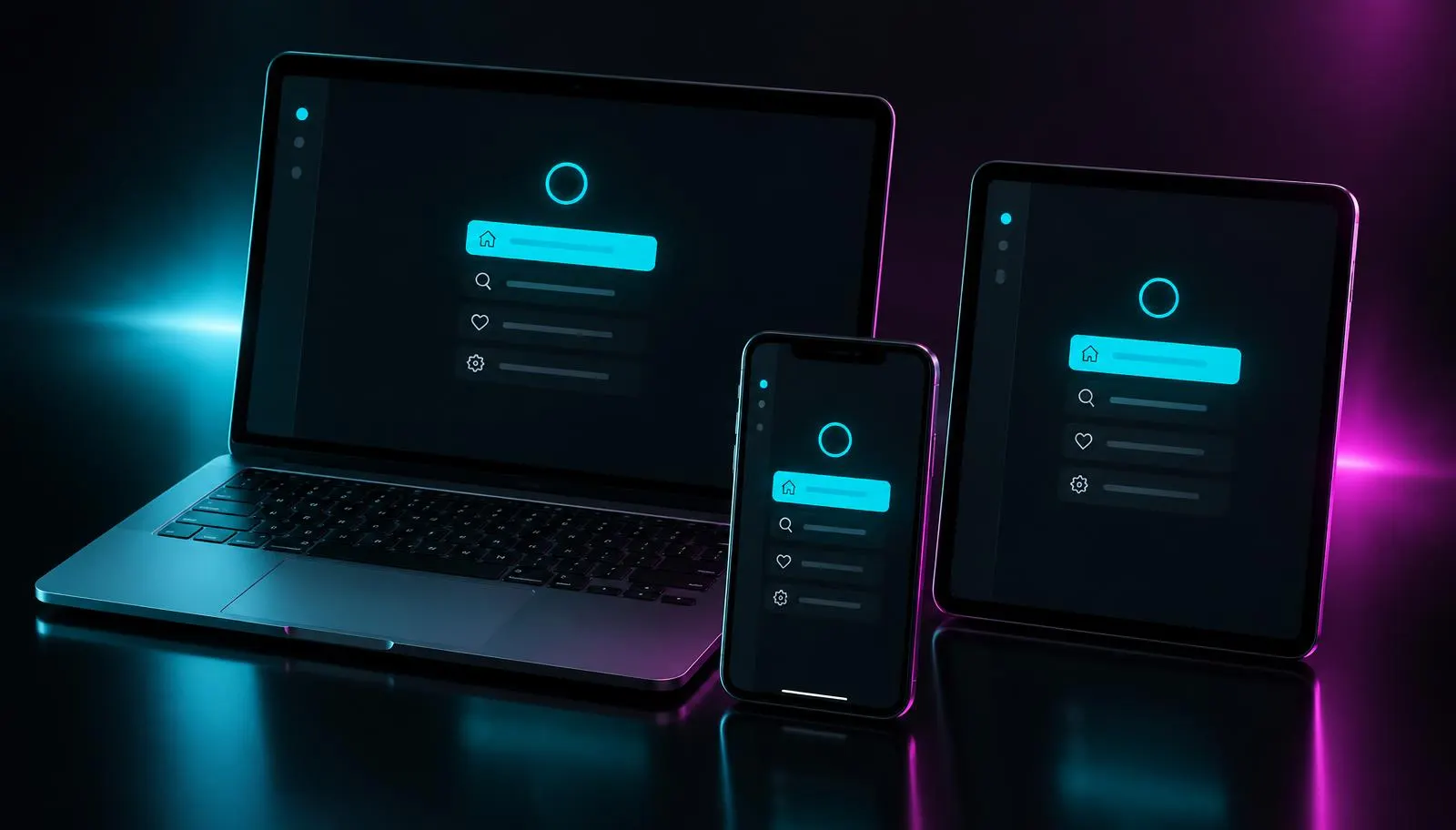
Your system runs on desktop, tablet, and phone, and can be published as your own app on the Apple App Store and Google Play. The field team, the sales floor, and the executive on a plane all see the same live data in the same simple view.
On every account we've ever scaled, the same thing was true. About 10% of the work was marketing and advertising. The other 90% was fixing the operations behind it, so the team could close more of what marketing brought in and actually handle the volume when it arrived.
The revenue and profit growth we're known for never came from better ads alone. It came from fixing the bottlenecks that nobody inside the company had time for: the leads lost between tools, the handoffs that broke under volume, the reports that took a day to build.
Those are the problems founders and executives complain about every week and never get to, because there's no one to delegate them to. We fix them all day, every day. This service is that work, built into the software your company runs on.
A growth lever, not a fancy tool.
Enterprise software implementations routinely run six to twelve months before anyone uses anything. Traditional custom software projects often take longer. We build differently, and most systems are live in one to three months after the scope is signed. Some go live in one.
| Typical enterprise CRM rollout | Traditional custom dev shop | Us | |
|---|---|---|---|
| How you pay | Per seat, every month, forever | Project fee, then hourly | One project fee, then nothing unless you want more |
| Time to live | Six to twelve months | Six months or more | One to three months |
| Built around | The vendor's template | A spec document | Interviews with your team |
| Language | The vendor's | The developer's | Yours |
| What each person sees | Everything, filtered by hand | Whatever was specced | Only their job |
| Training | Courses and certifications | Manuals | Very little, by design |
| Permissions and audit logs | Often limited to top-tier plans | Only if specced | Built in, down to every feature |
| You own the code | No | Usually | Always |
Every system starts from the same foundation. Your scope document adds whatever your company needs on top of it, but this is the floor, and it's in every project at every price.
That's the starting line. Your scope is where it becomes yours.
Every build starts at $50,000, and most land between $50K and $60K. It begins with an $8,000 to $10,000 setup fee that covers our on-site visit and your scope document, and that fee is credited in full toward your build. The final price is agreed in your scope before any building starts.
| Project size | Investment | Typical scope |
|---|---|---|
| Core system | $50,000 to $60,000 | One to three teams, standard migration, a handful of integrations. Most projects land here. |
| Expanded system | $60,000 to $100,000 | Several teams, heavier migration, more integrations, client portals or custom reporting |
| Full company OS | $100,000 to $150,000 | Company-wide build, years of history to migrate, multiple portals, regulated data, or advanced AI workflows |
| Investment | When | |
|---|---|---|
| Ongoing development | Quoted in your signed agreement | Only after your scoped build is complete and accepted. Billed month to month under your signed agreement and its scope of work. All sales are final. |
Everything in the base scope above, at every price.
Hosting and database fees are paid by you directly to the provider, so the infrastructure is in your name from day one. App store developer accounts are opened in your company's name.
| Stage | When | Amount |
|---|---|---|
| Setup fee | Before the on-site visit | $8,000 to $10,000, non-refundable, credited in full toward your build |
| Build under $150K | At scope signature | 50% |
| At acceptance | 50% | |
| Build at $150K | At scope signature | 50% |
| At the midpoint demo | 25% | |
| At acceptance | 25% |
A conversation about how your company runs today, what's slowing it down, and whether a custom system is the right fix. If it isn't, we'll say so.
If you want to move forward, the setup fee covers three days on-site and the full scope document. It's credited in full toward your build, so if you go ahead, it isn't an extra cost. It's the first payment.
We cover our own flights, hotel, and meals, and we take a handful of your executives to meals while we're there. The fee is non-refundable because the travel, research, interviews, and scope work all happen before a single line is built, and that work is yours to keep either way.
We schedule three consecutive days with your team. We interview every department, learn your jargon, your tools, and your workarounds, audit your current systems and everything connected to them, and ask each team what they want to see when they log in.
Every view, workflow, automation, integration, and migration step, with acceptance criteria and a price. This is where we agree on exactly what $50K to $150K is worth to your company. Add features and the price goes up. Trim them and it comes down. We adjust until it's right.
Once the scope is agreed, we sign it, and the one to three month build begins. The signed scope is the finish line. When everything in it is delivered and accepted, the project is complete.
A demo every Thursday showing what's finished, what's in progress, and an updated finish date. Feedback you give us on Thursday is often live by Friday afternoon.
Your data is pulled from every tool it's scattered across, cleaned, tested, and validated before launch. Each team gets a short walkthrough of their own version of the system.
Take the full code base, repository, and documentation and run it with your own team, or keep us on month to month to build what comes next. Either way, it's yours.
Ongoing development starts only after your scoped build is finished and accepted. It's optional and billed month to month under your signed agreement and its scope of work. As you add teams, departments, and needs, we add the menus, features, automations, and workflows to match, built by the same people who built your system and already know it.
It also doesn't have to stop at the system. For many of our clients, ongoing work extends into the rest of the operation: AI agents that watch the business around the clock and flag what needs attention, automated meeting notes and data entry, sales floor tools and alerts, customer journey automation, hard-coded landing pages and forms, and full-scale paid advertising. Everything we do for our operations and advertising clients is available inside the same engagement.
During the build, your team will think of things that weren't in the original scope. We keep a running list, and when the project is accepted, that list becomes the starting roadmap if you want to keep going.
Billing: fees are billed month to month to the payment method you authorize, under your signed initial agreement and its scope of work. Cancellation follows the terms of your signed agreement. Fees are non-refundable. See our Refund Policy.
It holds what a CRM holds, and much more. The difference is that it's built around your company instead of every company, it replaces the pile of tools around your CRM, and each person sees only their own job. Most of our clients don't think of it as a CRM. They think of it as where work happens.